Sous-louer ses bureaux à Paris : la solution pour valoriser vos m² inutilisés
May 28, 2026
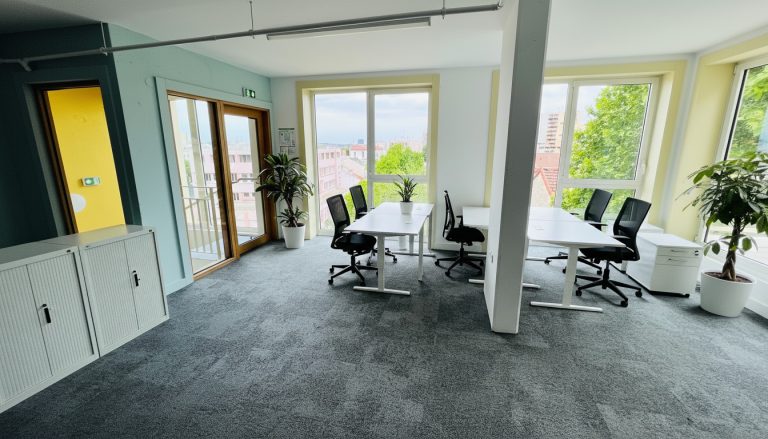
Subleasing office space in Paris has become a strategic solution for many companies. Since the widespread adoption of hybrid work, thousands of Parisian companies have been paying full rent for offices that are half-empty. Subleasing unused space is one of the few solutions that turns this burden into a resource. But it still needs to be done right. This guide brings together everything a business leader needs to know before getting started.
Subleasing office space in Paris involves making unused workstations available to another company in exchange for a financial contribution. This is legal provided that the commercial lease permits it, and it allows companies to significantly reduce the cost of underutilized space while retaining control over their premises.
Why so many Parisian offices are underutilized today
The model of an office where all employees work five days a week is a thing of the past. With two to three days of remote work now commonplace, the actual attendance rate at many companies in the Paris region ranges from 50% to 65%, depending on the day. The result: office spaces designed for a workforce that no longer comes in full strength, and square footage paid for at a high price without any return on investment.
In Paris, where office rents are among the highest in Europe, this inefficiency quickly adds up to tens of thousands of euros a year. Subleasing therefore seems like a sensible solution: having part of your space financed by a company that is looking for flexible office space without wanting to commit to a multi-year lease.
This phenomenon affects all types of businesses: startups that have oversized their office space in anticipation of slower growth, consulting firms whose consultants are out on client visits, and small and medium-sized enterprises that have switched to partial remote work. In each of these cases, the office remains half-empty for part of the week, without resulting in any savings. It is this cost rigidity in the face of increasingly variable usage that makes subleasing so relevant today.
Subleasing office space in Paris: a good idea, under certain conditions
Before opening your home to a third party, there are three key questions that need to be addressed: Do you have the right to sublet? What is the legal framework governing the arrangement? And how should you practically organize the living arrangement? Each of these deserves careful consideration—we cover them in detail in the dedicated articles in this series.
The Best Neighborhoods in Paris for Subletting
Subleasing office space is a common practice throughout Paris, regardless of where your premises are located. Whether it’s a space in a residential neighborhood or a business district, there is demand throughout the capital. That said, certain districts see particularly high demand and offer the best conditions for subleasing quickly and at a good price.
The most sought-after districts for subleasing office space in Paris are the 1st, 2nd, 3rd, and 4th arrondissements, which form the historic and economic heart of Paris. The 2nd arrondissement (Bourse, Sentier) is particularly dynamic thanks to its tech and startup ecosystem. The 9th, 10th, and 11th arrondissements, located on the Right Bank, attract many creative and digital companies seeking flexible and accessible spaces. The 16th and 17th arrondissements, which are more geared toward independent professionals, consulting firms, and service companies, also offer an active market for subleasing. Finally, the 8th arrondissement, the heart of the CBD (Central Business District), is obviously in high demand and has a very low vacancy rate. Regardless of your location in Paris, finding a reliable subtenant remains feasible as long as the space is properly marketed and the legal framework is in order.
What are the rights of a subtenant?
The rights of the sublessee depend largely on the legal framework under which the relationship is formalized. There are two main types of arrangements for subleasing office space: the service agreement and the 3/6/9 commercial lease. These two frameworks do not offer the same protections or impose the same obligations on the sublessee.
In the context of a service agreement, the subtenant is not legally considered a tenant: they are granted access to a workspace in exchange for a service or a fee, without the provisions of commercial leases applying. This arrangement is flexible and can be terminated on short notice, typically with one to three months’ notice. The subtenant has no right to renewal, nor is he entitled to any eviction compensation upon contract termination. In return, he enjoys great flexibility: he can vacate the premises quickly, without being bound by a minimum term. This type of contract is well-suited for startups, freelancers, or growing teams that prioritize agility. Nevertheless, an increasing number of well-established companies are also using it, thereby freeing themselves from the need to manage offices and the associated maintenance. This allows them to work in “serviced offices,” with an all-inclusive approach to services.
Under a 3/6/9 commercial lease, however, the sublessee enjoys much stronger protection. If the primary landlord has given written consent to the sublease (an essential requirement), the subtenant is entitled to the protections afforded by commercial leases, including the right to renewal at the three-year term and, under certain conditions, compensation for eviction in the event of non-renewal. Note, however: the subtenant’s rights can never exceed those of the primary tenant. If the primary lease terminates, the sublease agreement is automatically terminated, even if its contractual term has not expired. This framework is better suited for businesses seeking a degree of stability and predictability in their use of the premises.
1. The legal framework: Your lease is the guiding principle
The very first thing to check is your commercial lease. The law generally prohibits subleasing without the landlord’s consent, and most leases strictly regulate this possibility. Handling this incorrectly exposes you to real risks. We detail the rules, the clauses to review, and the procedure for obtaining the landlord’s consent in the article “Commercial Leases and Subleasing: What the Law Says.”In accordance with Article L145-31 of the Commercial Code, commercial subleasing is regulated.
Par ailleurs, la sous-location n’est pas la seule manière de partager ses bureaux. Prestation de services, convention d’occupation, domiciliation : ces formules obéissent à des logiques différentes, avec des conséquences fiscales et contractuelles distinctes. Voir « Sous-location, prestation de services, domiciliation : quelles différences ? ».
2. The financial challenge: measuring costs and setting prices
Pour savoir si l’opération en vaut la peine, il faut d’abord chiffrer ce que vos bureaux vides vous coûtent réellement — loyer, mais aussi charges, énergie et services calibrés pour un effectif absent. C’est l’objet de l’article « Bureaux sous-occupés : combien ça vous coûte vraiment », qui propose une méthode de calcul simple pour estimer votre manque à gagner et le revenu potentiel d’une sous-location.
3. Organization: selecting, supervising, and working together
Reste le concret. Quel type de sous-locataire accueillir sans se retrouver bloqué le jour où votre activité repart ? Notre article « Comment bien choisir ses sous-locataires sans bloquer sa flexibilité » aborde la sélection, la durée des engagements et les clauses de réversibilité. Et pour la vie quotidienne — sécurité des données, confidentialité, partage des espaces communs — consultez « Cohabiter au bureau : sécurité, confidentialité et vie d’équipe ».
How much can you expect to earn from subletting in Paris?
Revenue depends on location, the quality of the spaces, and the level of services included. In central Paris, a workstation in a shared office typically costs between €300 and €1,000 per month, depending on the district and the amenities. For a company with ten unused workstations, this represents a potential revenue of tens of thousands of euros per year—often enough to cover a significant portion of the rent.
Cette valorisation suppose toutefois un espace bien présenté, une offre lisible et une gestion irréprochable. C’est précisément là qu’un opérateur spécialisé change la donne : il transforme des postes vides en offre commercialisable et en assure la gestion. Le contexte plus large de cette tendance est analysé dans « Travail hybride : transformer vos m² vides en revenus ».
The five most common obstacles—and how to overcome them
Any manager considering subletting faces the same concerns. Identifying them allows you to address them one by one, rather than giving up out of excessive caution.
“I’m not sure I’m allowed to do that”
This is the most common—and most legitimate—concern. The solution lies in carefully reviewing the lease and, if necessary, discussing the matter with the landlord. In many cases, an alternative arrangement to a strict sublease can help ensure the transaction goes smoothly. This topic is covered in a separate article in this report. Before subleasing your office space in Paris, checking your lease is therefore the first essential step.
“I’m afraid of getting on my landlord’s bad side”
Involving the landlord early on, in a transparent manner, defuses most tensions. A landlord who is informed and reassured about the tenant’s background generally has no reason to object to a transaction that does not harm their interests. Transparency is the best strategy here.
“What if I get stuck?”
The fear of not being able to reclaim your office space is real, but it can be addressed through contractual arrangements. Short-term commitments and reversibility clauses give you the flexibility to reclaim your space if your business picks up again. Flexibility is something you decide on when you sign the contract.
“Managing tenants isn’t my job”
That’s right, and that’s exactly why outsourcing to a service provider makes sense. Tenant management—contracts, billing, move-in/move-out inspections, and tenant turnover—is a specialized field in its own right, and it’s often more cost-effective to entrust it to a specialist.
“I’m concerned about the security of my data and the well-being of my teams.”
Preparations for co-working are underway: separating IT networks, defining access rights, and establishing rules for the use of shared spaces. When well-organized, this approach safeguards your company’s confidentiality and ensures your employees’ comfort. It is a matter of organization, not an insurmountable obstacle.
The steps to a successful sublease project
Once the decision has been made, the process follows a five-step approach:
- Assess: Determine the number of long-term vacant positions and the associated costs.
- Review the terms: review the lease, identify the appropriate legal framework, and, if necessary, contact the landlord.
- Prepare the space: define shared areas, organize access points, and separate networks.
- Marketing and screening: presenting the property and selecting reliable, suitable tenants.
- Contract management: drafting flexible contracts, then handling day-to-day management and changes.
Each of these steps can be handled in-house or outsourced. The choice depends on how much time you can devote to them and how much peace of mind you’re looking for.
Handle it yourself or delegate to a service provider?
Subletting directly is possible, but it amounts to taking on a second job: finding tenants, drafting contracts, invoicing, collecting payments, conducting move-out inspections, handling move-outs and any unpaid rent—not to mention managing common areas. For a business owner already overwhelmed by their main business, the workload is rarely sustainable in the long run.
Managing properties yourself may be suitable for those who have one or two units to share and the time to manage them. Beyond that, administrative complexity and risks (unpaid rent, vacancies, disputes) increase rapidly. Outsourcing then becomes not only more convenient, but often more profitable, as a professional property manager optimizes occupancy rates and pricing.
C’est le rôle d’un opérateur comme Coworkea : prendre en charge l’intégralité de la chaîne — commercialisation, cadre contractuel, gestion quotidienne — pendant que vous conservez vos surfaces et percevez un revenu. Implantée sur de nombreux sites franciliens et au service d’entreprises de tous secteurs, Coworkea connaît les attentes du marché parisien et sait valoriser un plateau sous-occupé sans que le dirigeant ait à s’en préoccuper.
Are your offices underutilized? Coworkea will assess their sublease potential for free and handle all the management. Let’s talk about your space.
FAQ: Frequently Asked Questions
Is it legal to sublet office space in Paris?
Yes, provided that the commercial lease allows it or that the landlord gives their consent. As a general rule, the law prohibits subletting without the landlord’s permission; it is therefore essential to review your lease beforehand.
How much can you earn by subletting vacant office space?
In Paris, a sublet workspace typically costs between €300 and €1,000 per month, depending on the arrondissement and the amenities included. Total revenue depends on the number of available workspaces and the quality of the space.
Do you need the landlord’s permission to sublet?
In the vast majority of cases, yes. Commercial leases strictly regulate subleasing, and the landlord’s written consent is usually required. Failure to comply may result in termination of the lease.
Can we get our offices back if business picks up again?
Yes, provided that this is specified in the contract. Short-term agreements or those that include reversibility clauses allow you to maintain the flexibility needed to reclaim the space if necessary.
Why go through a provider like Coworkea instead of subleasing directly?
An operator handles marketing, contractual matters, and day-to-day management, freeing the business owner from having to take on a second job. The operator also maximizes the value of the spaces through its market expertise.