Hybrid Work: Turn Your Empty Square Meters Into Revenue
June 26, 2026
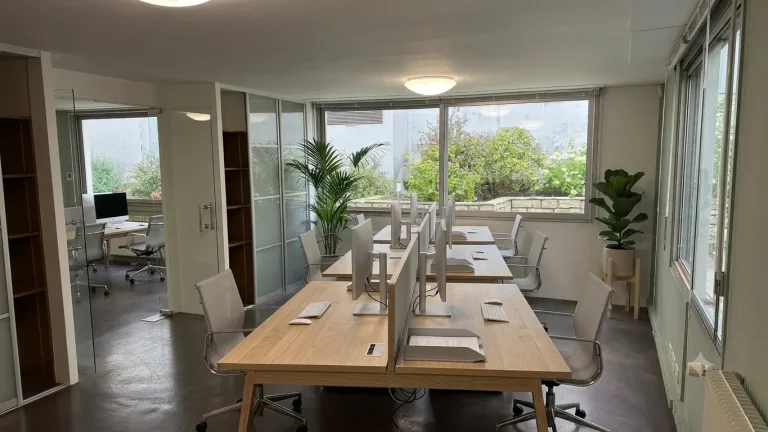
Hybrid work has permanently transformed the way offices are used. For Parisian companies, the issue of empty offices in the era of hybrid work is both a challenge and an opportunity: the opportunity to reinvent the purpose of their workspaces.
Hybrid work has reduced office occupancy rates to an average of 50–65%. Rather than bearing this cost, companies can turn their underutilized square meters into revenue by making them available to other companies through subleasing or a coworking agreement.
A Sustainable Transformation of Usage Patterns
Partial remote work has become the norm. Working remotely two to three days a week has become commonplace in service companies in the Île-de-France region, and this trend shows no signs of reversing. The direct consequence: offices designed for a full workforce are now occupied only part-time.
This reality is not a temporary blip but a structural shift. Companies that incorporate it into their real estate strategy gain a competitive edge over those that continue to pay full price for vacant space.
From Expense Recognized to Asset Capitalized
The first instinct when faced with empty offices is to view them as a burden—and they are, often a significant one, as our article shows "Underutilized Offices: How Much Do They Really Cost You?". But that same space can become a resource. By opening it up to other companies looking for flexible office space, we flip the script: the space that used to cost money now generates revenue.
This shift is a response to a real demand. Many startups and growing teams are looking for office space in Paris but do not want to commit to a multi-year commercial lease. The underutilized space at established companies perfectly meets this need for flexibility.
As a result, we see a form of natural complementarity in the Parisian market: on one hand, established companies with excess square meters; on the other, newer or more flexible organizations that want space without the rigidity of a long-term lease. Subleasing and coworking bridge the gap between these two needs, benefiting both parties.
One company’s underutilized space meets another’s need for flexibility: the unused square meters of an established business become the solution for companies seeking office space without a long-term commitment.
Rethinking Office Space as a Flexible Asset
Beyond revenue, opening up spaces offers other benefits: a more vibrant environment, opportunities for networking and partnerships, and a real estate structure that adapts to growth rather than hindering it. The office ceases to be a fixed cost and becomes an asset that can be managed.
However, this approach requires a solid framework: the right legal structure, the right choice of occupants, and well-organized coexistence. These topics are covered in the other articles in this special report and are summarized in the comprehensive guide.
Coworkea, a Partner in the Hybrid Transition
Fort d’un réseau de sites qui ne cesse de s’étoffer en Île-de-France et d’une clientèle fidèle, Coworkea accompagne les entreprises qui veulent transformer leurs surfaces sous-occupées en revenus. De l’évaluation du potentiel à la gestion quotidienne, en passant par le cadre contractuel, Coworkea prend en charge l’ensemble pour que vos m² travaillent pour vous.
Has hybrid work left some of your office space empty? Coworkea turns it into a source of revenue. Request a free assessment of your potential.
Frequently Asked Questions
Why Is Hybrid Work Leaving Offices Empty?
Because partial remote work (two to three days a week) reduces the actual attendance rate to an average of 50–65%, even though the office space was designed to accommodate the full workforce.
How can you turn empty office space into revenue?
By making underutilized space available to other companies through subleasing or a coworking agreement. The space that was previously a cost center then becomes a source of revenue.
Is there a demand for these spaces in Paris?
Yes. Many growing companies are looking for flexible office space in Paris without wanting to commit to a long-term lease, which is exactly what the available underutilized space offers.
Is hybrid work a lasting trend?
Yes, this is a structural shift in usage patterns, not a passing trend. Companies would be wise to incorporate this reality into their real estate strategy.